
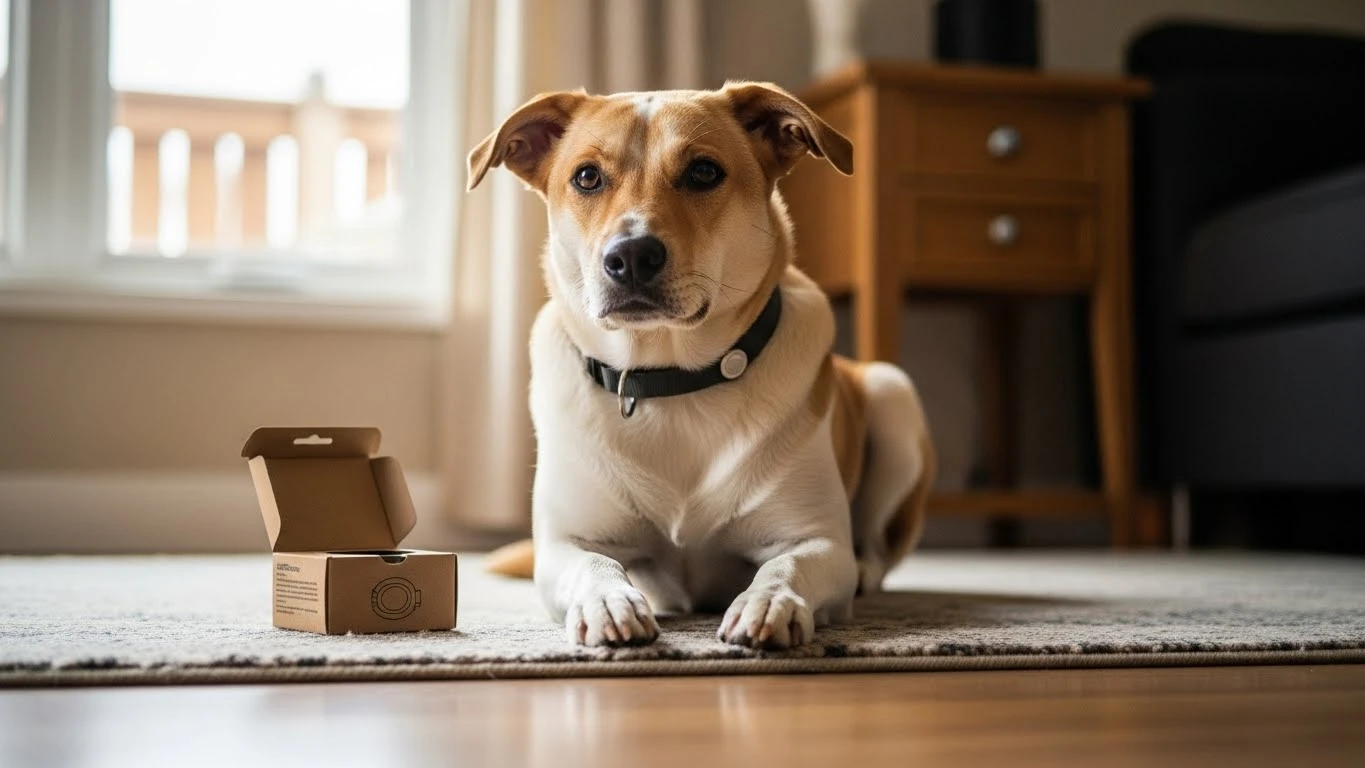
Your dog goes from happy to panicked the moment thunder rolls in. Fireworks send them hiding under the bed. You leave for work, and they destroy the house due to separation anxiety. You’ve heard about calming collars. Your vet mentioned them. Friends swear by them. But here’s the question that matters: do they actually work?
The short answer: sometimes. But not how you might think.
Calming collars can help anxious dogs, but only in specific situations and usually only when combined with other strategies. Understanding what they actually do (and don’t do) is the first step to helping your anxious dog.
QUICK REFERENCE TABLE
| Calming Method | Best For | Effectiveness | Ease of Use | Cost |
| Calming Collar | Mild-moderate anxiety, situational stress | Moderate (varies by dog) | Very easy | Low |
| Anxiety Vest | Mild anxiety | Moderate | Medium (dogs may resist) | Medium |
| CBD Oils/Treats | Mild-moderate anxiety | Moderate-High | Medium (dosing matters) | Medium-High |
| Pheromone Diffuser | Home-based anxiety | Moderate | Easy (home use only) | Low |
| Prescription Medication | Severe anxiety | High | Medium (vet visits needed) | High |
WHAT IS A CALMING COLLAR FOR DOGS?
A calming collar looks like a regular dog collar but contains natural calming substances, typically pheromones, lavender, chamomile, or essential oils. The idea comes from how mother dogs naturally soothe their puppies through scent.
Calming collars release synthetic dog-appeasing pheromones (DAP), which mimic the calming scent that mother dogs produce. This is based on real animal behavior; puppies genuinely respond to their mother’s natural pheromones. The collar attempts to recreate that effect artificially.
Most calming collars last about 30 days and release their calming compounds continuously without requiring anything from you. Just put it on, and it works, in theory.
HOW DO CALMING COLLARS WORK?
When you put the collar on your dog, their body heat activates the embedded calming ingredients. These chemicals then vaporize into the air surrounding your dog, creating a persistent calming effect.
The science makes sense on paper. Your dog’s natural body heat triggers the release of pheromones that are supposed to reduce anxiety. No training needed. No medication required. No effort from the owner.
But here’s where it gets important: understanding the mechanism tells you something crucial about what calming collars can and cannot do.
WHAT DOES SCIENCE ACTUALLY SAY?
Here’s where things get honest: the evidence is mixed.
Some veterinary researchers support pheromone-based collars, particularly for mild to moderate behavioral problems. Dogs that are mildly stressed or anxious from environmental changes sometimes do improve.
But, and this is a big but, if your dog has severe anxiety, aggression issues, or behavioral problems rooted in trauma, a calming collar alone won’t fix it. They can be part of a broader treatment plan that includes behavioral training, environmental enrichment, or medication from your vet. But they’re not a standalone solution.
REAL DOG OWNERS SHARE THEIR EXPERIENCES
Don’t just take our word for it. Here’s what actual pet parents report:
Sarah, Labrador owner: “My dog is terrified of thunderstorms. A friend suggested trying a calming collar. I was skeptical, but honestly, he was noticeably less anxious during the last storm. Not a miracle cure, but definitely better than before.”
Jamal, Beagle owner: “Our rescue dog had extreme separation anxiety. We were close to having to rehome him. A calming collar really helped calm him down. Combined with positive reinforcement training, we’ve made huge progress.”
The pattern in real-world experiences is consistent: calming collars help, but they work best when combined with other approaches.
WHEN CALMING COLLARS ACTUALLY HELP
Calming collars work best for short-term or situational anxiety. These situations include:
- Thunderstorms and fireworks
- Moving to a new house
- Car rides or air travel
- Separation anxiety (mild cases)
- Vet visits or grooming
- New environments or changes in routine
If your dog gets anxious in these situations, a calming collar might reduce the intensity of their fear. It’s not about eliminating the problem; it’s about taking the edge off while you address the root cause.
WHEN YOU SHOULD NOT RELY ON A CALMING COLLAR
Be honest about your dog’s anxiety level. If your dog has severe anxiety, aggression, or behavioral problems rooted in trauma, don’t depend solely on a calming collar. These situations require professional help, a certified pet behaviorist or veterinarian trained in behavioral medicine.
Additionally, while calming collars are generally safe, some dogs can have negative reactions. Dogs with breathing issues or allergies to the ingredients might react badly. Always watch your dog closely when introducing any new product and stop using it if you notice negative changes in behavior or health.
The biggest mistake pet owners make: assuming a calming collar alone can fix anxiety. It can’t. It can help, but only as part of a complete approach.
WHEN ANXIETY MIGHT ACTUALLY BE A MEDICAL ISSUE
Here’s something crucial that often gets overlooked: not all anxious behavior is anxiety.
If your dog is constantly scooting (dragging their bottom), excessively licking their back, or suddenly losing weight, these aren’t signs of anxiety. These are signs of parasites. A calming collar won’t help because the problem isn’t behavioral, it’s medical.
Parasites like tapeworms cause real physical discomfort. Your dog isn’t anxious, they’re uncomfortable. No amount of pheromones will fix that. They need actual medical treatment.
This is why it’s crucial to rule out medical issues before assuming your dog has an anxiety problem. If your dog shows signs of parasites, scooting, excessive licking, weight loss, or digestive issues, see your vet immediately. They may need medical treatment, not a calming collar.
CALMING COLLARS VS. OTHER CALMING SOLUTIONS
Different dogs respond to different approaches. Here’s how calming collars compare:
Calming Collars: Very convenient, lasts 30 days, non-invasive. Works for some dogs with mild anxiety but not effective for every dog.
Anxiety Vests: Applies gentle pressure (like a hug). Some dogs find them soothing; others hate wearing them.
CBD Oils and Treats: A natural option some vets support. Requires careful dosing and research into quality.
Pheromone Diffusers: Great for home-based anxiety but not portable. Works similarly to collars but in a fixed location.
Prescription Medications: Most effective for severe anxiety but requires ongoing vet care and monitoring.
Opt for options like dog calming chews, which provide additional calming support and can be combined with other methods. The advantage of chews is that they’re easy to administer, and some dogs find the act of chewing itself calming.
DO CALMING COLLARS WORK?
Yes, but with realistic expectations.
Calming collars can genuinely help dogs with mild to moderate anxiety or situational anxiety. They’re convenient, non-invasive, and worth trying if your dog struggles with thunderstorms, travel, or other temporary stressors.
But they’re not a cure-all. They won’t fix severe anxiety. They won’t eliminate aggression. They won’t treat medical problems. What they can do is take the edge off anxiety while you implement a real solution.
What actually works for anxious dogs:
A consistent schedule and routine with plenty of physical and mental exercise. Regular veterinary checkups (including parasite screening and other medical checks). Behavioral training tailored to your dog’s specific anxiety. Calming collars as one tool in a complete toolkit, not the whole toolkit.
Think of a calming collar for dogs the way you’d think about a comfort item: helpful and worth trying, but not a replacement for actual treatment.
FREQUENTLY ASKED QUESTIONS
Q: Will a calming collar fix my dog’s severe anxiety?
A: No. Severe anxiety requires professional behavioral training or possibly medication from your vet. Calming collars help with mild to moderate anxiety, not severe cases.
Q: Can calming collars have side effects?
A: Most dogs tolerate them fine, but some may react to the ingredients. Watch for excessive scratching, behavioral changes, or breathing difficulty. Stop using if you notice problems.
Q: My dog shows signs of scooting and weight loss. Should I use a calming collar?
A: No. These are often signs of parasites, not anxiety. See your vet immediately. Your dog needs medical treatment, not a calming collar.
Q: How long before I see results?
A: Some dogs respond within days. Others take longer. If you don’t see improvement after a full 30-day collar, try a different approach.
Q: Can I combine a calming collar with other treatments?
A: Yes. In fact, combining approaches (collar + training + exercise + routine) works better than any single method alone.
Q: Are calming collars safe for all dogs?
A: Generally yes, but check the ingredients. Dogs with allergies or breathing issues should be monitored closely.
THE REAL TAKEAWAY
Your anxious dog deserves help. Calming collars might be part of that help, but they’re not the whole answer.
Start with the basics: consistent routine, plenty of exercise, regular vet checkups (including parasite screening), and behavioral training. Then layer in other tools, calming collars, anxiety vests, or calming supplements, as needed.
Your vet can help you figure out what your specific dog needs. But one thing’s certain: your dog won’t calm down with a magic solution. They’ll calm down when you address the root cause and build a comprehensive plan.