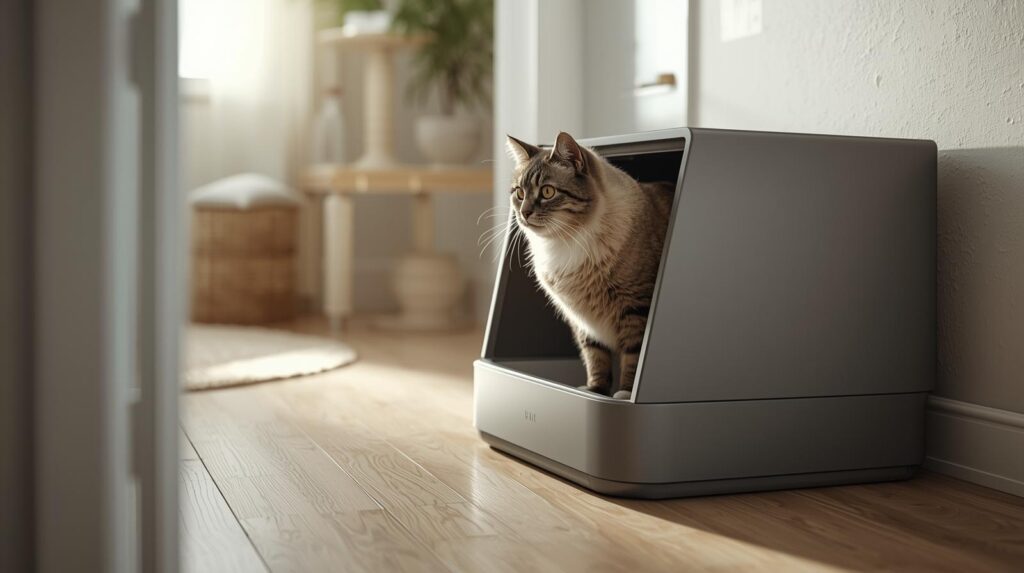
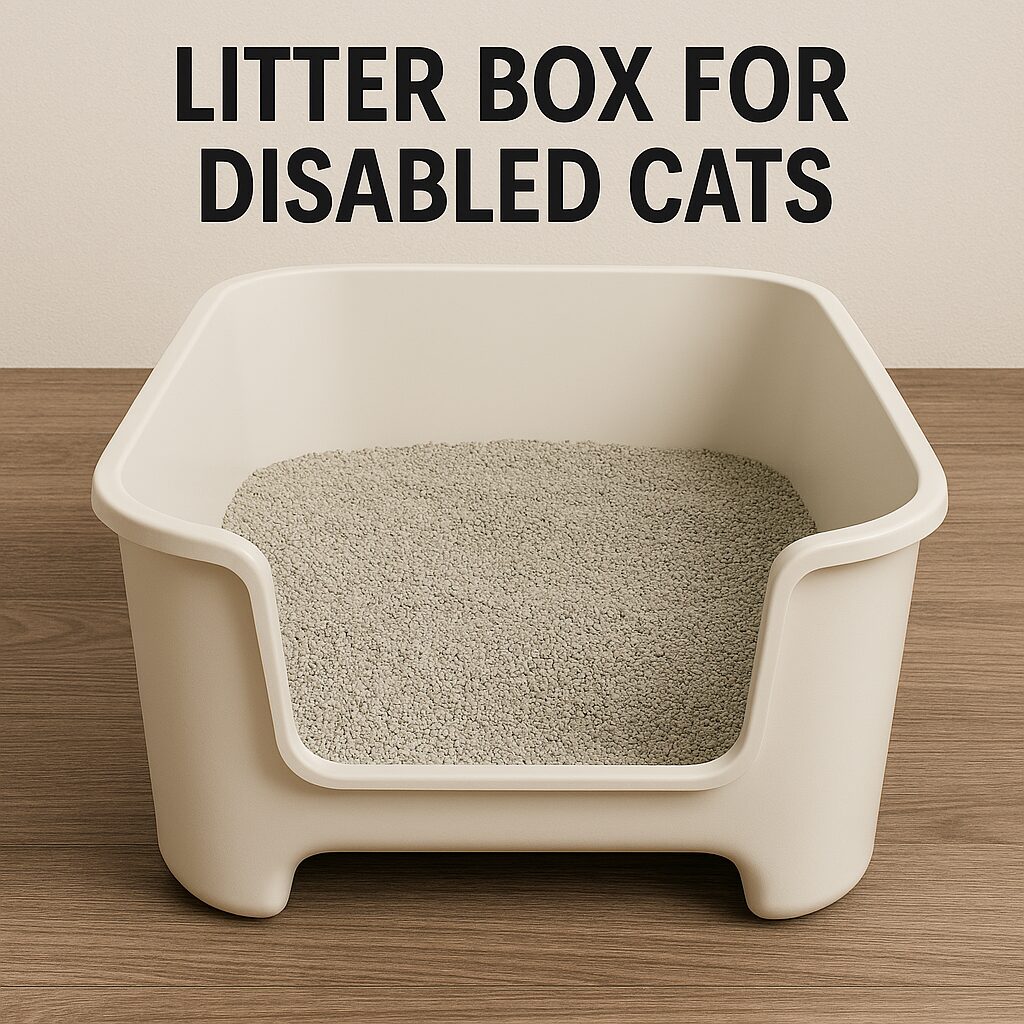
Standard cat litter that came on the market is not the best choice for disabled cats because they cannot use them easily and safely.
Cats that are handicapped and having issues in movement, that can Conditions such as arthritis, hind leg weakness, paralysis, or age-related stiffness, can prevent a cat from climbing into traditional boxes or maintaining balance inside them.
Choosing or adapting a litter box for these cats is essential for their comfort, health, and hygiene. A well-designed Litter Box for Disabled Cats can reduce stress for both the cat and the owner, improving the overall quality of life.
First, you have to understand the cat’s specific mobility limitations. Observe how they approach and enter their current litter box. Are they hesitant to climb over high sides? Do they struggle with balance once inside?
Table of Contents
Features to Look for in a Litter Box for Disabled Cats
1. Low Entry or Ramp Accessibility
Cats with limited mobility often cannot step over high walls. A box with a low entry point or a ramp allows easier access. Ramps should be stable and slip-resistant, with a gentle incline to prevent strain. For cats with severe mobility issues, a completely floor-level box may be the best solution.
2. Wide Interior and Shallow Walls
A wider box gives disabled cats more room to move and adjust their position while inside. Shallow walls reduce the effort needed to enter and exit. Some cats may prefer a box with one side slightly lower than the others to facilitate entry while still containing litter.
3. Easy-to-Clean Surfaces
Smooth, non-porous surfaces make cleaning easier and help prevent bacterial buildup. This is particularly important for disabled cats that may occasionally have accidents outside the box. Materials like plastic with a non-slip base are ideal.
4. Stability and Slip Resistance
Boxes should not tip or slide when a cat enters or exits. Look for models with weighted bases or non-slip mats underneath. Stability ensures confidence for cats who already struggle with balance.
5. Consider Litter Type
For cats with mobility issues, lightweight, low-dust, clumping litter is ideal. It is easier to dig in, reduces respiratory irritation, and simplifies scooping for owners with limited strength or reach.
Also read: Cat Meows While Poopin
Top Litter Boxes for Disabled Cats
1. Collapsible Kitten Litter Box – Chuyouan
This foldable litter box is ideal for cats with mobility issues and small spaces. Its low entrance makes it easy for senior or disabled cats to step in without struggle. The box features a collapsible design, expanding to 17.7″ x 13.4″ x 5″ or folding down to 1.9″ for storage or travel.
A removable pedal reduces litter tracking, while the smooth PP and TPR materials ensure durability and easy cleaning. Its open design improves air circulation, keeping cats comfortable, and the stable base prevents tipping.
2. Stainless Steel Cat Litter Box – Qiuma
Made for senior or injured cats, this litter box has a 3.15″ low front entry combined with high sides for splash protection. Its stainless steel construction resists odors and scratches, making cleaning effortless.
Available in multiple sizes, it accommodates small to medium cats and even multi-cat households. The smooth, non-stick surface ensures hygiene, while its durability makes it a long-term solution for cats with mobility challenges.
3. Extra Large Low Entry Cat Litter Box – Ying Tutu
Designed for larger cats and multi-cat homes, this low-entry litter box measures 24″ x 20″ x 5.7″, offering ample space for cats to move comfortably. Made from durable ABS material, it is more rigid and long-lasting than standard plastic boxes.
The low entrance makes it accessible for senior cats or those with arthritis, while the smooth inside surface simplifies cleaning. Its size also supports kitten training and behavioral needs, ensuring all cats have space and comfort.
Why These Boxes Stand Out
- Low entry points for easy access
- Durable, easy-to-clean materials
- Stable, safe design for cats with limited mobility
- Options for single cats, multi-cat households, and travel
These products are highly rated, widely used, and specifically tailored to meet the needs of disabled or senior cats, making them top choices for owners seeking accessible litter solutions.
Accessibility for Cat Owners with Disabilities
- Elevated Designs: Reduce bending and strain for owners with limited mobility.
- Reachability Tips: Place boxes where they are easy to access from a wheelchair or seated position.
- Ergonomics: Use scoops with long handles and non-slip mats to simplify cleaning.
Training and Helping a Disabled Cat Use the Box
- Introduce changes gradually to avoid stress.
- Encourage use with treats or gentle guidance.
- Adjust entrance angles or ramps if the cat struggles.
- Keep the litter clean to motivate consistent use.
- Monitor behavior for signs of discomfort or avoidance.
Maintenance, Safety, and Health Considerations
- Regular Cleaning: Scoop daily and fully clean the box weekly to prevent odor and infection.
- Litter Choice: Lightweight, low-dust, clumping litter reduces strain for both cat and owner.
- Safety: Ensure ramps and boxes are stable and slip-resistant.
- Monitor Health: Watch for changes in urination or defecation that may indicate discomfort or health issues.
FAQs
Q: What features help disabled cats use a litter box?
A: Low entry, wide interior, shallow walls, and stability. Ramps can help cats with severe mobility issues.
Q: Can I make a DIY accessible litter box?
A: Yes. Use a shallow tub, cut one side lower, add a gentle ramp, and keep it stable.
Q: What’s best for cats with hind leg weakness?
A: Low-entry boxes, ramps, and wide interiors to give them room to move safely.
Q: How do I reduce litter tracking?
A: Use high-sided boxes, place mats outside, and choose low-tracking litter.
Q: Are elevated boxes good for people in wheelchairs?
A: Yes. They reduce bending and make scooping easier while maintaining accessibility for cats with proper ramps or entry adjustments.
Conclusion and Buying/Building Checklist
Creating an accessible litter box setup benefits both disabled cats and their owners. Choosing the right features or modifying a box ensures comfort, safety, and hygiene.
Checklist:
- Low entry or ramp access
- Wide interior with shallow walls
- Stable, non-slip base
- Easy-to-clean surfaces
- Lightweight, low-dust litter
- Elevated options if needed for owner accessibility
- Gradual training and observation for the cat’s comfort
Following these guidelines helps disabled cats use the litter box confidently while making maintenance manageable for owners with mobility challenges.