Written by Amy Leiker, Founder of LoftyLoo®
Most cat parents spend time thinking about litter types, odors, and box placement, but hardly anyone thinks about something that dramatically affects a cat’s comfort and confidence: the height of the cat litter box.
For decades, litter boxes have been made one way: flat plastic trays sitting directly on the floor. Not because it’s ideal for cats, but because it’s inexpensive to manufacture.
But when you look at litter box habits through the lens of feline psychology, environmental safety, mobility, and instincts, one thing becomes clear: Height matters — a lot.
Cats don’t naturally choose low, enclosed, exposed spaces to eliminate. They choose safe, visible, elevated, predictable spots where they can see all angles and avoid surprise encounters.
Let’s explore why raising the cat litter box, even slightly, can transform a cat’s emotional comfort and bathroom consistency.
Table of Contents
Why Height Changes a Cat’s Bathroom Experience
Cats are both predators and prey. Even in loving homes, that survival wiring never shuts off, especially when they’re in vulnerable positions like using the litter box.
A raised litter box helps satisfy three core feline instincts:
1. Visibility: Cats need clear sightlines to relax.
Cats feel safer when they can see across the room rather than crouch in the lowest position possible.
2. Escape routes: Cats want predictable exit access.
Height makes it easier to step in, step out, and move without feeling trapped or cornered.
3. Environmental control: Cats want consistency.
A raised litter box reduces unpredictable interruptions from dogs, kids, and foot traffic.
Floor-level boxes often work against these instincts, increasing stress, hesitation, or avoidance.
Also read: The Ultimate Maine Coon Litter Box Guide
What Veterinary Professionals Say About Raised Litter Boxes
Ellen Carozza, Licensed Veterinary Technician (LVT, VTS)
“After decades working exclusively with cats, I can say elevated, open-access setups make litter care easier and more comfortable for owners with physical limitations. LoftyLoo’s design reduces bending and overcrowded entry angles, which is incredibly helpful for homes with mobility needs.”
Dr. Brittney Kilgore, DVM
“LoftyLoo is the only elevated, open-access litter box I’ve seen that truly solves accessibility challenges. It gives 360-degree access for cleaning while still supporting cat comfort. It fills a major gap in litter box design, especially for seniors or anyone who struggles with low, enclosed boxes.”
Dr. Alicia Ashley, DVM
“Cats deserve better than floor-level boxes. Elevating the litter box improves comfort and predictability for both cats and their guardians.”
Additional Veterinary Insight
“Floor-level boxes give dogs easy access, and I treat many dogs who become sick after eating cat litter or waste. Elevating the box is safer, cleaner, and long overdue.”
Why Floor-Level Litter Boxes Create Stress for Many Cats
Even if your cat uses the box regularly, they may still feel uneasy in ways you don’t see.
Here’s why low boxes often fail feline instincts:
• They place cats at the lowest point in the room
This increases vulnerability and reduces visibility.
• They make cats more prone to being startled or approached
Dogs, toddlers, and other pets can easily disrupt them.
• They force crouching and unnecessary joint strain
Especially for senior cats or cats with pain.
• They offer no natural elevation relief
Height itself is soothing for cats.
For highly sensitive or easily startled cats, elevation can make the difference between calm elimination and anxious avoidance.
Want to know the coat color of your cat? Use this tool: Cat Coat Genetics Calculator
Signs Your Cat Might Prefer a Raised Litter Box
Even if your cat doesn’t “complain,” you may notice subtle signs that height could help:
Behavioral clues
- hesitation when approaching the litter box
- Repeated scanning or pausing before entering
- rushing or bolting out of the box quickly
- choosing bathmats, rugs, or soft items instead
- eliminating just outside the box
Environmental clues
- busy or noisy home
- presence of dogs or active children
- high-traffic hallways or open floor plans
- Litter box placed in exposed corners
Physical clues
- stiff movements or joint discomfort
- slower transitions during crouching
- reluctance to climb onto low surfaces
- Aging changes affecting mobility
Elevating the cat litter box can solve all three categories at once.
How Dogs Make Litter Boxes More Stressful, And How Height Helps
One of the most common household conflicts: dogs and litter boxes.
Dogs investigate litter boxes because they are:
- scent-rich
- easily accessible
- intriguing “discovery zones.”
- sometimes treated like snack bowls (unfortunately)
But for cats, this is deeply stressful.
Dog behavior that triggers litter box anxiety:
- approaching or sniffing the box
- staring while the cat tries to eliminate
- blocking pathways or exits
- attempting to eat litter or waste
A raised litter box naturally separates the species:
Benefits of elevation around dogs
- Dogs lose interest in higher platforms
- cats eliminate without unexpected interruptions
- Privacy increases dramatically
- bathroom consistency improves
- dog health is protected (no litter ingestion)
Elevation often becomes the single most effective dog-proofing strategy.
Mobility Matters: How Height Helps Senior or Arthritic Cats
As cats age, they experience:
- reduced joint flexibility
- decreased jumping range
- painful crouching
- slower transitions
- stiffness in the hips and spine
A raised litter box eliminates the hardest part: getting all the way down to the floor and back up again.
Senior cats especially thrive with elevation, because:
- The step-in height is gentler
- Strategic movement reduces joint strain
- Less pressure is placed on the elbows, hips, and knees
- Their body maintains a more natural, comfortable posture
Even if your cat isn’t visibly limping, they may still appreciate an easier, softer entry angle.
How High Should a Litter Box Be?
Ideal elevation varies, but veterinary guidance consistently supports:
✔ a height above typical dog access
✔ a height low enough for cats to step into comfortably
✔ a height that reduces crouching strain
✔ a height that improves sightlines naturally
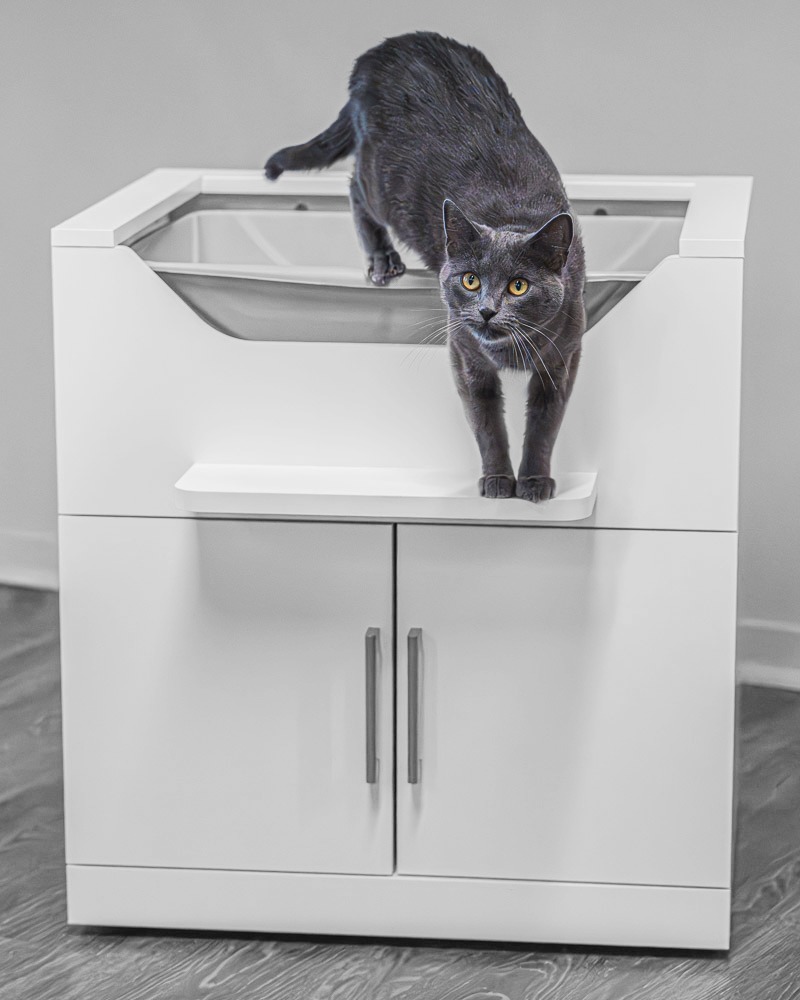
For most households, this is roughly knee-height for humans, exactly where elevated designs like LoftyLoo position the box.
Which Cats Benefit the Most From Elevated Litter Boxes?
While nearly all cats appreciate elevation, certain groups experience immediate improvement:
1. Senior cats
Better posture and easier entry/exit.
2. Arthritic cats
Less bending, less joint pressure, more dignity.
3. Nervous or anxious cats
Height reduces surprise factors and increases confidence.
4. Multi-pet households
Dogs lose access; cats gain privacy.
5. Previously stressed or inconsistent litter box users
Elevated setups restore predictable comfort.
6. Cats with high sensitivity to noise or movement
They feel safer when elevated above floor activity.
What Cat Parents Notice After Elevating the Litter Box
Consistently, they report:
• calmer and slower litter box approaches
Cats stop rushing or scanning constantly.
• more confident elimination
Less hesitation or avoidance behavior.
• fewer “near miss” accidents
The cat makes it to the box more reliably.
• less hiding and more self-assured behavior
Confidence around the box affects the whole home.
• reduced dog interference
No more dog noses or surprise interruptions.
• cleaner, more hygienic litter areas
Elevation improves airflow and reduces scatter.
You may not realize how stressed your cat was until you see the difference.
Is Raising the Litter Box Right for Your Cat?
Consider elevation if your cat experiences:
- hesitation
Pausing, scanning the room, or lingering near the box before entering — signs your cat feels unsure or unsafe at floor level. - stress
Fast eliminations, tense posture, or sudden dashes out of the box indicate that your cat doesn’t feel fully secure using the space. - interruptions
Dogs, kids, or other pets approaching during bathroom time can break your cat’s trust in the area and lead to avoidance. - joint stiffness
Difficulty crouching, discomfort stepping down to the floor, or slow movements that make low boxes physically challenging. - dog interference
Sniffing, crowding, or attempting to access the box, a top cause of litter box anxiety in multi-pet homes. - aging changes
Reduced flexibility, lower mobility, or decreased jumping confidence that make elevated, gentle step-in access more supportive. - unpredictable bathroom habits
Occasional accidents, choosing soft surfaces, or inconsistent litter box use may stem from discomfort or insecurity.
Final Thoughts: When It Comes to Litter Boxes, Height Isn’t a Luxury, It’s Instinct
For decades, litter boxes stayed the same simply because no one questioned the design.
But cats have been telling us — through behavior, body language, and subtle stress cues — that they want more: More visibility. More privacy. More comfort. More height.
Raising the litter box is one of the simplest, most instinct-aligned changes you can make in a cat’s environment.
Because when you honor a cat’s natural preferences, everything improves:
- bathroom consistency
- emotional well-being
- household harmony
- multi-pet dynamics
- confidence and comfort
Your cat deserves a space that supports their instincts, not one that forces them to tolerate an outdated design.
FAQs: Cat Litter Box Height
1. Why does litter box height matter?
Cats feel safer and more confident when they can see their surroundings, have easy escape routes, and maintain control over their environment. Elevating the box aligns with their instincts.
2. Are floor-level boxes bad for cats?
Not always, but low boxes can increase stress, make cats feel vulnerable, cause joint strain, and allow interruptions from dogs, children, or other pets.
3. How high should an elevated litter box be?
The ideal height is high enough to deter dogs and reduce floor-level distractions, but low enough for cats to step in comfortably. Roughly knee-height for humans works well for most households.
4. Which cats benefit most from a raised litter box?
Senior or arthritic cats
Nervous or anxious cats
Multi-pet households
Cats with inconsistent litter box habits
Noise-sensitive cats
5. Can elevation help prevent dog interference?
Yes. Raised litter boxes make it harder for dogs to access litter or waste, which protects both cats and dogs.
6. What signs indicate my cat might prefer an elevated box?
Hesitation or scanning before entering
Rushing out of the box or eliminating outside it
Stiff or slow movements when crouching
Frequent accidents or choosing soft surfaces like rugs
7. Will elevated boxes help senior or arthritic cats?
Absolutely. They reduce joint strain, make entry and exit easier, and maintain a more natural posture.
8. Does elevation affect cleaning?
Yes. Open-access, elevated designs like LoftyLoo provide 360° access, making cleaning easier and more hygienic for owners.
9. Can raising the litter box reduce stress for my cat?
Yes. Cats report calmer, more confident litter box use, fewer accidents, and less anxiety around high-traffic areas or other pets.
10. Is elevation a luxury or a necessity?
It’s instinct-aligned, not a luxury. Height supports feline comfort, privacy, and emotional well-being while reducing household stress.